
Dog bite wounds need quick action to prevent infection and complications. At DogingtonPost, we’ve put together a practical guide to help you handle these injuries at home and know when your vet needs to step in.
Whether it’s a minor scrape or something more serious, proper dog bite wound care for dogs makes all the difference in recovery.
First Aid Steps That Actually Work
Stop the Bleeding Immediately
The first few minutes after a dog bite wound occurs determine infection risk and healing time. Your immediate actions matter more than anything else. Stop any bleeding with direct pressure using a clean cloth or sterile gauze. Wrap the paw in gauze or a small towel and apply constant pressure. Bleeding should stop in 5–10 minutes without lifting the cloth to check progress, as this interrupts clotting. If bleeding continues after ten minutes, apply fresh gauze and maintain pressure for another five minutes.
Clean the Wound Thoroughly
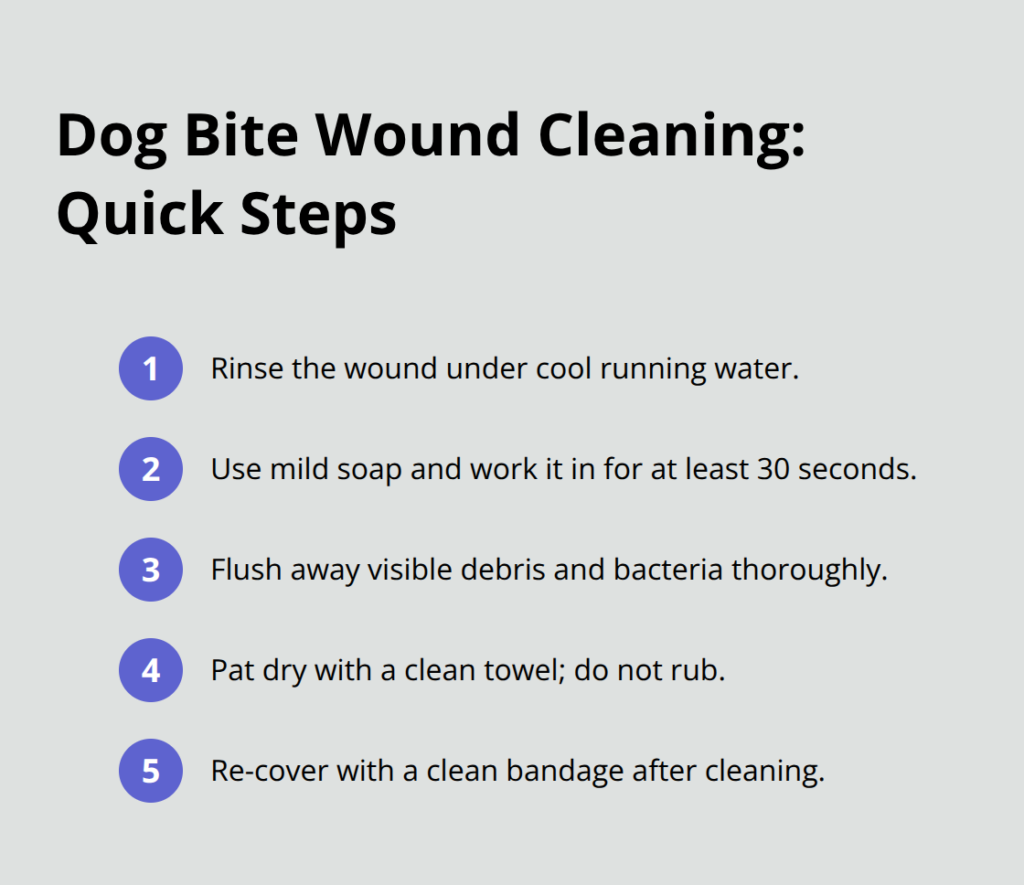
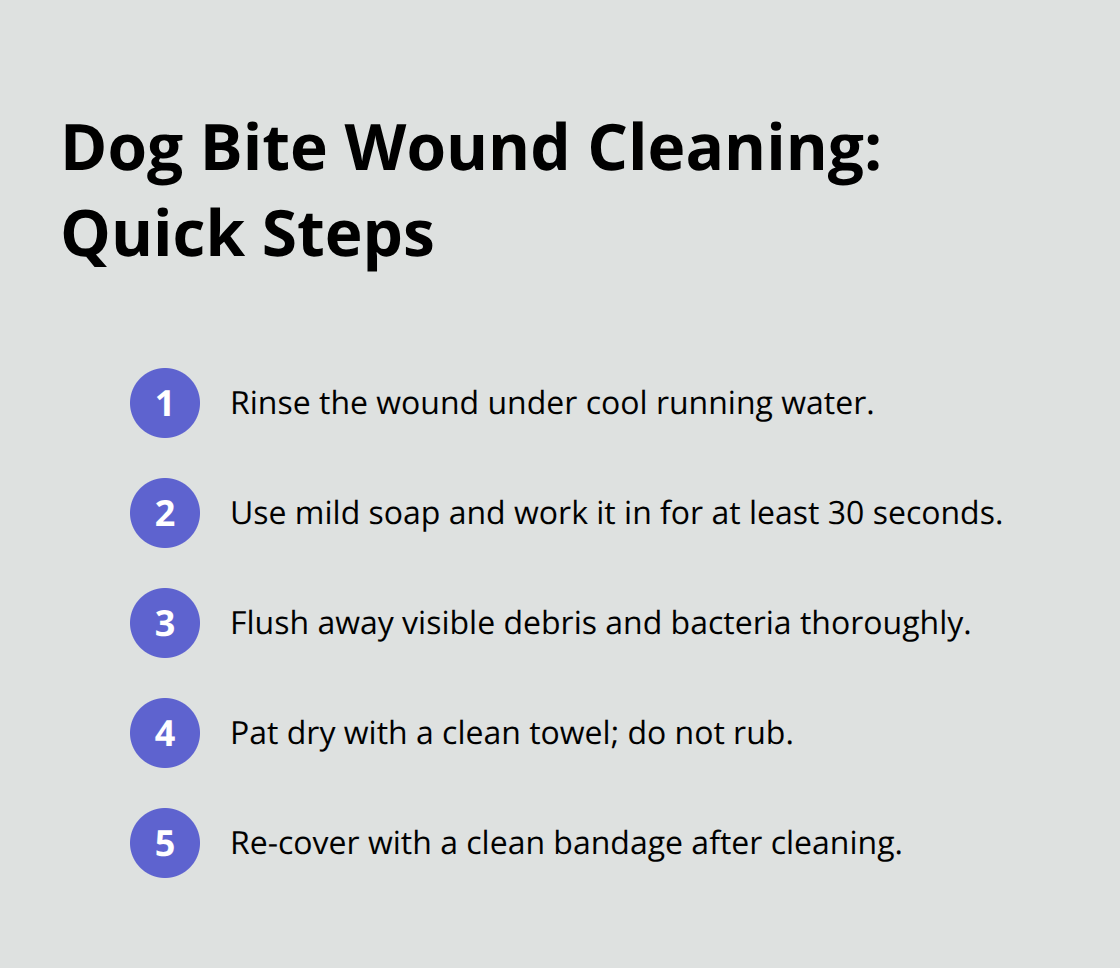
Once bleeding slows, wash the wound thoroughly with cool running water and mild soap. Work the soapy water into the bite for at least thirty seconds according to Mayo Clinic guidance. This step removes bacteria and debris that could lead to infection. Pat the area dry with a clean towel rather than rubbing, which can irritate the tissue.
Apply Antibiotic Protection
After cleaning, apply a topical antibiotic cream or ointment directly to the wound. Topical bacitracin is recommended for minor skin injuries and should not be used over larger areas of the body. Cover the wound with a clean bandage or gauze pad to keep it protected from dirt and further contamination. Change the bandage daily or whenever it becomes wet or dirty.
Assess Wound Severity
The depth of the bite matters significantly for your next steps. Minor skin breaks with minimal bleeding respond well to home care alone. However, deep puncture wounds, severe bleeding that won’t stop after fifteen minutes of pressure, or bites on sensitive areas like the face, neck, or joints require immediate veterinary evaluation. Don’t wait if you’re uncertain about the wound’s severity-delaying professional assessment for serious bites can lead to complications including infection, tissue damage, or even rabies exposure if the biting dog’s vaccination status is unknown.
Your wound assessment determines whether you move forward with home treatment or contact your veterinarian right away.
When Your Dog Needs a Vet for Bite Wounds
Deep Puncture Wounds Require Immediate Care
Deep puncture wounds demand immediate veterinary attention, and you shouldn’t gamble with these. If the bite created holes rather than surface tears, or if bleeding continues after fifteen minutes of direct pressure, contact your vet right away. The depth of the bite determines whether home care works or professional evaluation is necessary. Puncture wounds trap bacteria deep in the tissue where topical antibiotics cannot reach, leading to serious infections or abscesses that develop days later. Your vet has the tools to properly flush deep wounds and may prescribe oral antibiotics to prevent infection from spreading internally. Multiple puncture marks, especially if they’re close together or show significant bruising around the wound, signal an urgent situation.
High-Risk Bite Locations Need Professional Assessment
Location matters as much as depth when deciding whether to call your vet. Bites on the face, neck, or joints require professional assessment even if they appear minor. These areas have complex anatomy with important structures close to the surface, and infections here spread quickly to vital organs or joints. Facial bites risk permanent scarring or damage to the eyes, ears, or muzzle. Neck wounds carry infection risk toward the chest and throat.
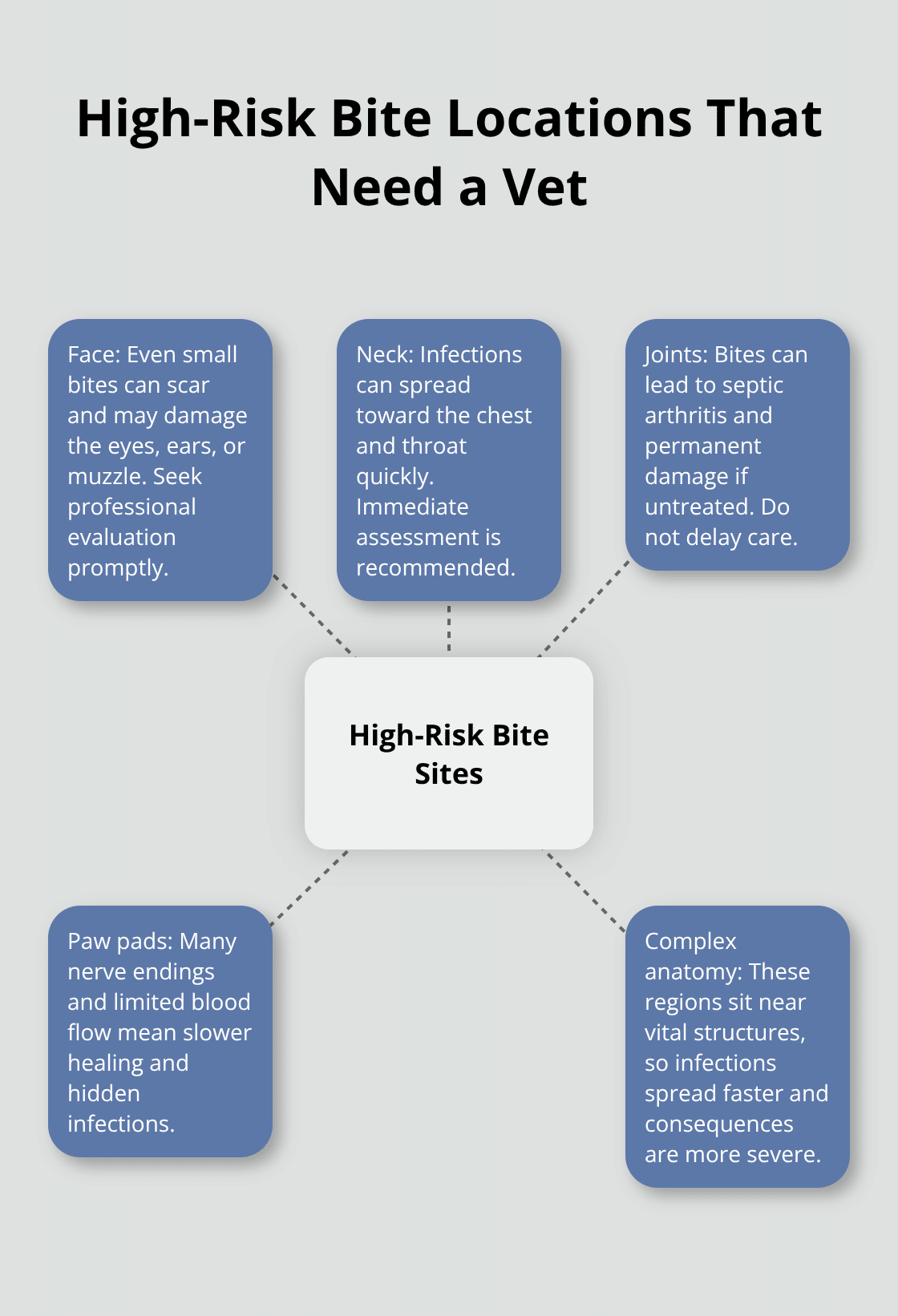
Joint bites lead to septic arthritis, which causes permanent damage if left untreated. Paw pad bites also warrant attention-paws have many nerve endings and limited blood flow, making them prone to slow healing and hidden infections.
Watch for Infection Signs Over the Following Week
Signs of infection appear within days after a bite occurs. Increased swelling, discharge or pus, color changes from red to purple, and warmth radiating from the wound all signal infection.
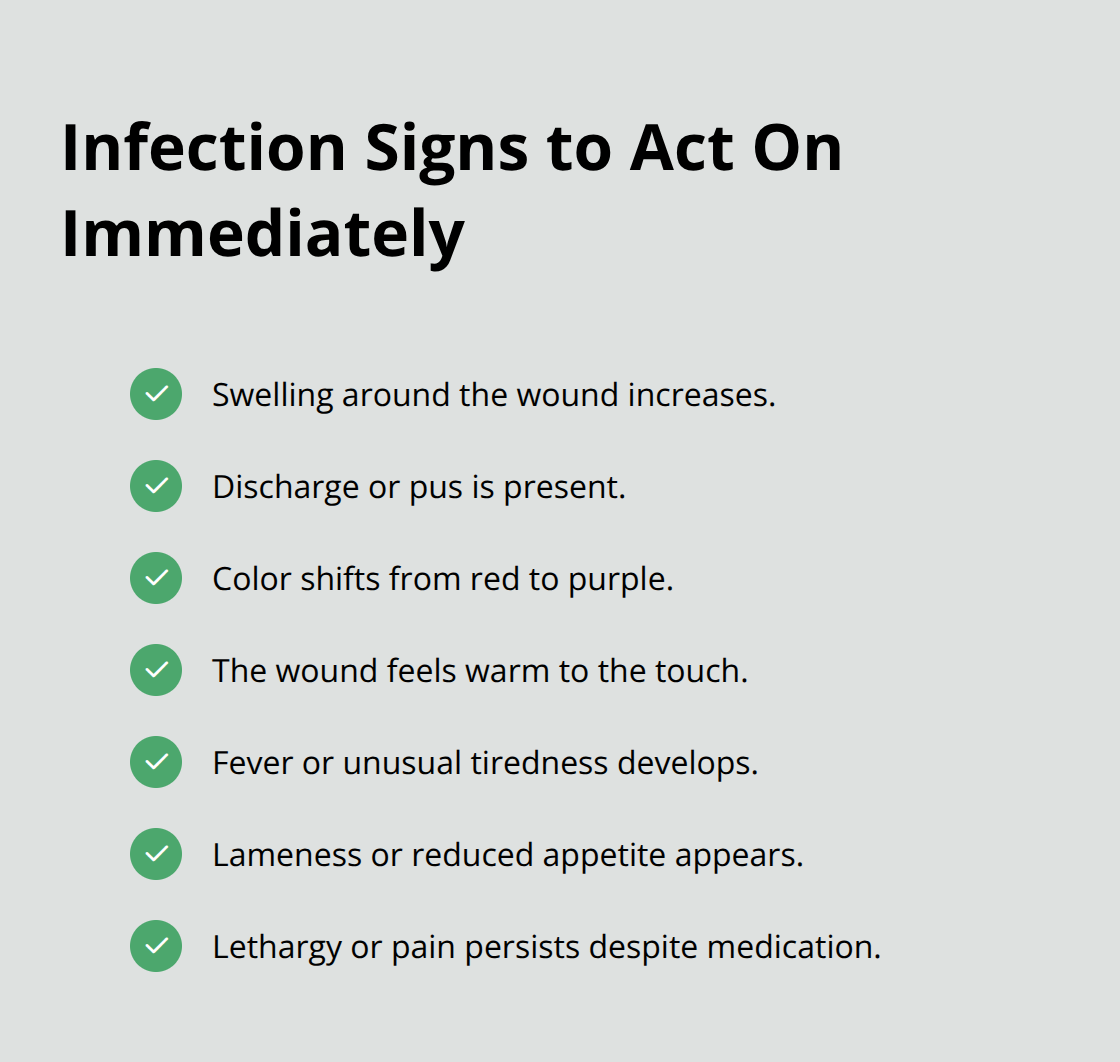
Fever or tiredness indicate your dog’s body is fighting a serious infection. Lameness, reduced appetite, lethargy, or pain despite pain relief medication require immediate veterinary care. Infection can develop rapidly after animal bites, so multiple warning signs shouldn’t appear before you call your vet. Act on the first sign of trouble rather than waiting to see if symptoms worsen on their own.
Your vet’s assessment determines the treatment path forward and prevents complications that could affect your dog’s long-term health.
How to Care for a Dog Bite Wound at Home
Daily Wound Cleaning and Bandage Changes
Wound care after the first few days shifts from stopping bleeding to preventing infection and supporting healing. Change the bandage at least once daily, more often if it becomes wet or soiled. Wash the wound with soap and water. Apply an antibiotic cream or ointment and cover the bite with a clean bandage each time you change it. Pat dry thoroughly with a clean towel rather than rubbing, since moisture trapped under a bandage creates an ideal environment for bacterial growth. Keep the area as dry as possible between cleanings. This routine continues until the wound closes completely, which typically takes 7–14 days depending on wound depth and your dog’s healing speed.
Prevent Your Dog From Licking the Wound
Dogs have a strong instinct to lick wounds, so prevent this behavior at all costs by using an Elizabethan collar or similar protective device if your dog shows interest in the bite. Licking introduces bacteria from the mouth directly into the wound and delays healing significantly. The protective collar stays on until the wound closes completely and your vet confirms healing is progressing normally.
Complete the Full Course of Antibiotics
Your veterinarian will likely prescribe oral antibiotics if the bite was deep or showed any infection risk, and you must complete the full course even if the wound looks better within a few days. Stopping antibiotics prematurely creates the perfect environment for antibiotic resistance to develop. Give medication exactly as prescribed without skipping doses. Consistency matters more than anything else when fighting infection after a bite wound.
Manage Pain and Monitor for Complications
Pain medication may also be prescribed, particularly for deep wounds or bites on joints and paws. Administer pain relief on schedule rather than waiting until your dog shows obvious discomfort, since pain restriction prevents your dog from moving the injured area normally and this immobility actually slows healing. Monitor the wound daily for any changes: increased redness, swelling, discharge, odor, or warmth radiating from the site all indicate infection despite treatment. If any of these signs appear, contact your veterinarian immediately rather than assuming the prescribed antibiotics will handle it. Some infections resist initial treatment and require different medications or additional professional care to prevent serious complications.
Final Thoughts
Dog bite wound care for dogs requires three immediate actions: stop the bleeding with direct pressure, clean thoroughly with soap and water, and apply antibiotic protection. These first steps determine whether infection develops or healing progresses smoothly. Know when to call your vet-deep puncture wounds, bites on the face or neck, severe bleeding that won’t stop, and any signs of infection demand professional assessment. Waiting too long with serious bites risks complications including abscesses, septic arthritis, or rabies exposure if the biting dog’s vaccination status is unknown.
Recovery monitoring matters as much as initial treatment. Change bandages daily, keep the wound clean and dry, prevent licking with an Elizabethan collar, and complete the full antibiotic course even when the wound looks better. Watch for infection signs throughout the healing process-increased swelling, discharge, fever, or lethargy all require immediate veterinary attention. Most dog bite wounds heal within 7–14 days with proper care, but some infections develop slowly and resist initial treatment.
Prevention stops future incidents before they happen. Maintain your dog’s rabies vaccination at current levels and avoid situations where your dog might encounter unvaccinated or stray dogs, especially in areas where rabies occurs. Teach your dog appropriate behavior around other dogs, supervise interactions carefully, and document any bite incidents (date, location, involved animals, and vaccination status) to share with your vet. Visit DogingtonPost for practical care tips and expert advice to handle health emergencies and keep your dog safe.