
Dog training success hinges on having the right tools. At DogingtonPost, we’ve found that quality equipment makes the difference between frustration and progress.
This guide covers the essential dog obedience utility articles every trainer needs. From collars and leashes to treats and toys, we’ll show you exactly what works and why.
Dog Training Collars and Leashes
Start With the Right Collar for Your Dog’s Age
Starting with the wrong collar derails training before it begins. Flat collars work best for puppies under sixteen weeks old because they’re gentle on developing necks and allow you to build foundation work without unnecessary pressure. Once your dog masters basic sits and recalls, a martingale collar becomes valuable for dogs with narrow heads or those prone to slipping. Martingales apply gentle pressure around the neck when the dog pulls, creating feedback without choking. For serious obedience work targeting AKC Utility tests, many handlers prefer limited-slip collars that offer more control during precision exercises like the Signal Exercise or Scent Discrimination work. The American Kennel Club doesn’t restrict collar types in Utility competition, but handlers consistently report better results with collars that provide clear communication without pain. Avoid chain choke collars entirely-they damage your dog’s trust and create unnecessary risk during training sessions.
Choose Leash Length Based on Your Training Phase
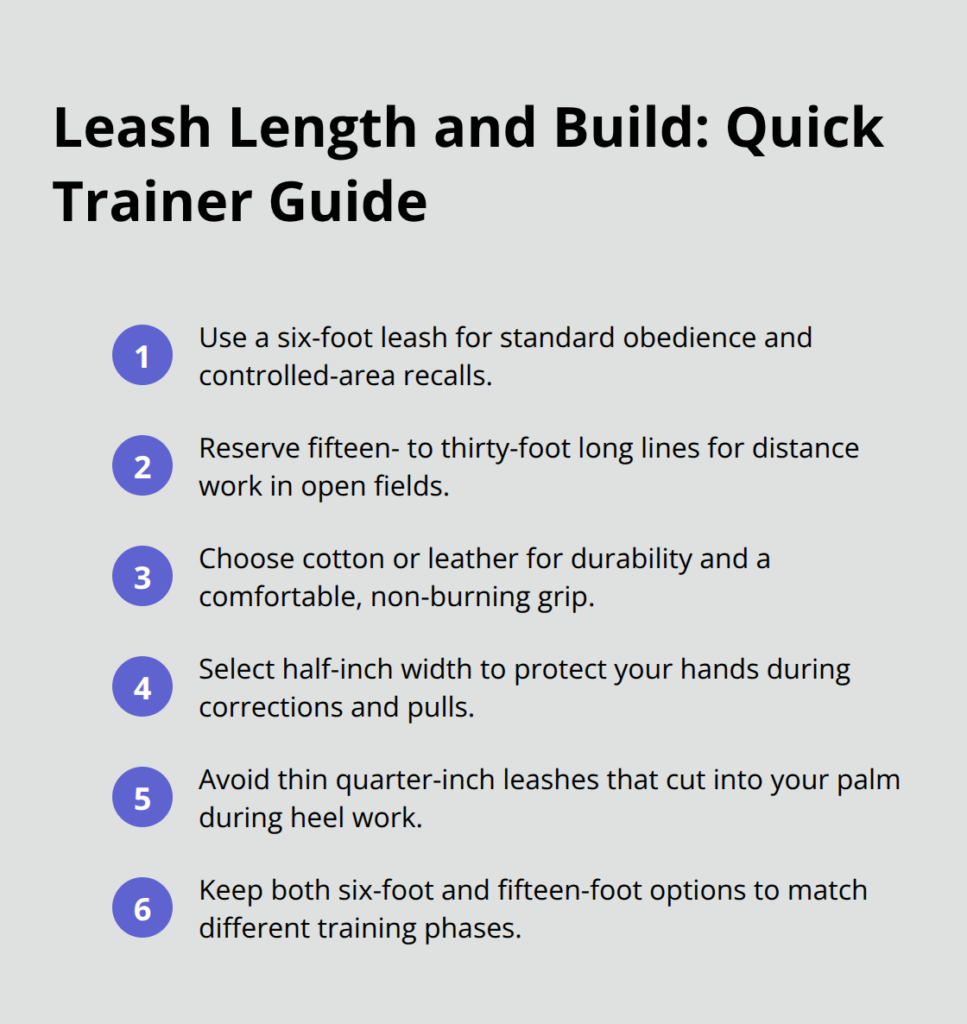
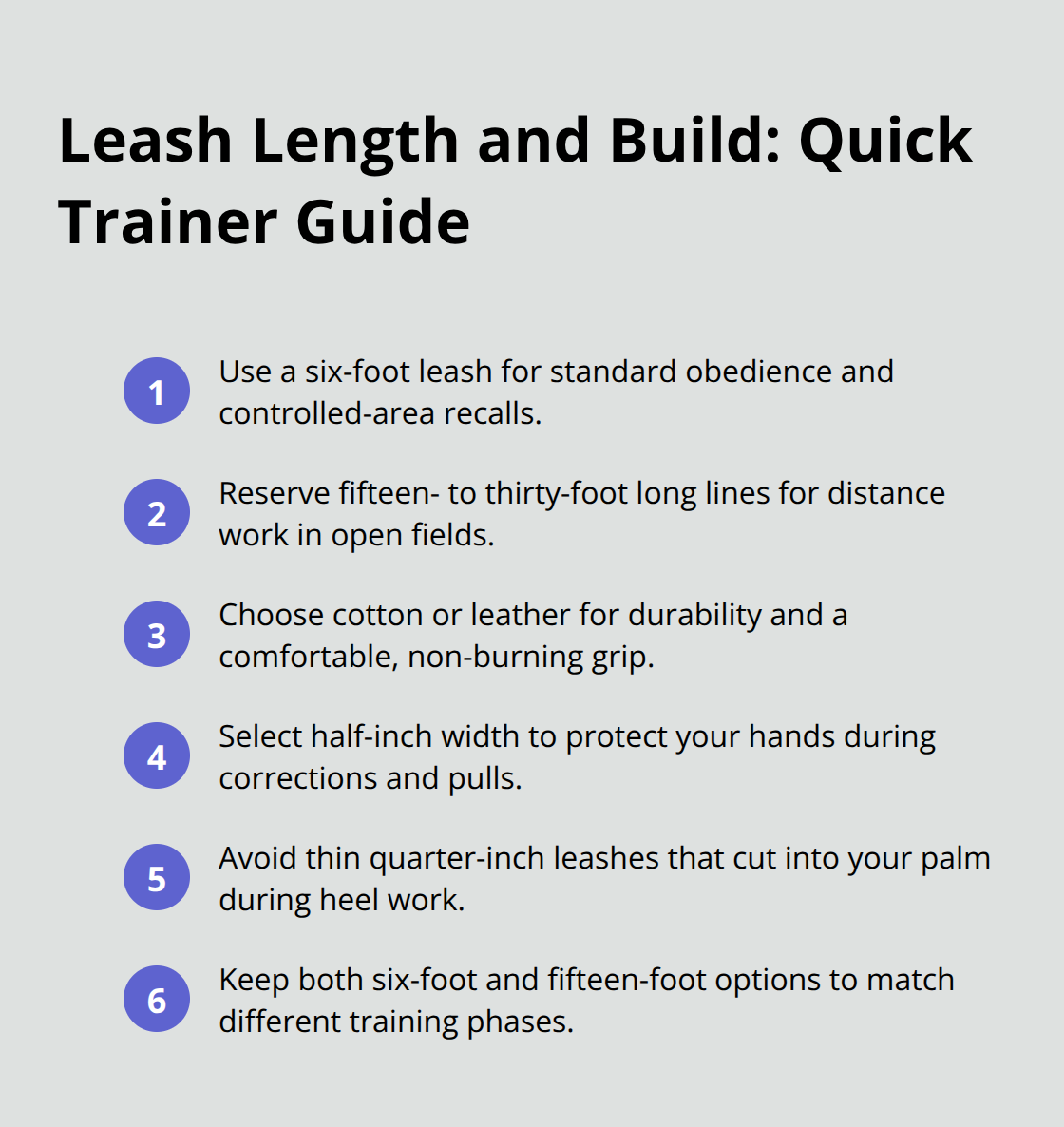
A six-foot leash is the standard for obedience training because it provides enough length for your dog to move naturally while keeping you in control during Heel work and Recall drills. Longer leashes like fifteen or thirty-footers belong only in open fields where you practice distance work or build a reliable recall in low-distraction environments. Long lines excel for teaching Recall because your dog can’t escape, and you can reward immediately when they come. Cotton and leather leashes last longer than nylon-leather specifically develops a comfortable grip over time and doesn’t create rope burn if your dog suddenly bolts. Nylon works fine for everyday walks but deteriorates faster under consistent training pressure. Width matters too: half-inch leashes distribute pressure evenly across your hand, while thin quarter-inch leashes cut into your palm during Heel corrections or when your dog pulls hard. Most professional trainers stock both six-foot and fifteen-foot options because different training phases demand different tools.
Proper Fit Prevents Injury and Maintains Focus
A collar that’s too loose slips off during training, while one too tight restricts breathing and causes neck strain. Your collar should allow two fingers to slide comfortably between the collar and your dog’s neck-this is the standard safety guideline. Check the fit weekly because puppies grow rapidly, and adult dogs can gain weight seasonally. Inspect leather collars monthly for cracks or deterioration; a broken collar during an AKC Utility test means automatic disqualification. Stainless steel hardware resists rust better than painted metal, so it lasts through repeated wet training sessions. Replace any leash showing fraying, tears, or weak stitching immediately because equipment failure during Directed Retrieve or Moving Stand work creates dangerous situations. Proper fit removes distractions-your dog focuses on commands instead of an uncomfortable collar, and you maintain confident control without worrying about equipment failure.
Rewards and Motivation Come Next
With your collar and leash properly fitted, you’re ready to introduce the treats and reward systems that drive real progress in obedience training.
Training Treats and Reward Systems
High-Value Treats Drive Real Progress
High-value treats are non-negotiable for obedience work, and most handlers waste money on mediocre options that fail to motivate their dogs. Soft, smelly treats work better than hard kibble because your dog consumes them in under two seconds, allowing rapid repetition during Sit, Recall, and Heel drills. Freeze-dried liver, chicken, and beef treats from brands like KONG and Ray Allen Manufacturing deliver intense smell that captures attention even in distracting environments where your dog trains for AKC Utility tests. Size matters significantly: treats should be pea-sized or smaller so your dog focuses on the command, not chewing. During the Signal Exercise or Scent Discrimination work, large treats create delays that break your training rhythm. Many handlers rotate three to five different treat types weekly because dogs habituate to the same flavor, and novelty maintains motivation. Cheese works exceptionally well for Recall training because the smell travels farther than most treats, making it ideal for long-line work in open fields.
Avoid Treats That Disrupt Training and Health
Choose healthy, dog-safe treats like small pieces of carrot or apple for rewards during training sessions. Track your treat spending: serious obedience competitors spend between thirty and sixty dollars monthly on training treats alone, depending on training frequency and dog size. This investment pays off through faster learning and consistent performance in the ring.
Clicker Training Marks Success Instantly
Clicker training tools accelerate learning because they mark the exact moment your dog performs correctly, creating instant clarity about what earned the reward. The clicker sound is consistent and distinct from your voice, so your dog learns faster than with verbal markers like “Yes” that vary in tone and timing. Start clicker training during foundation work with Sit and Recall because these exercises teach your dog that the click means a treat arrives within one second. Press the clicker immediately when your dog’s rear hits the ground during Sit practice, then deliver the treat before your dog stands again. For Recall, click the instant your dog’s eyes lock on you or their front paws move toward you, not when they arrive. This timing precision prevents your dog from learning to come partway and stop. Professional trainers universally recommend stainless steel clickers over plastic because they produce a sharper, more audible sound that carries across training fields.
Treat Pouches and Feeding Adjustments
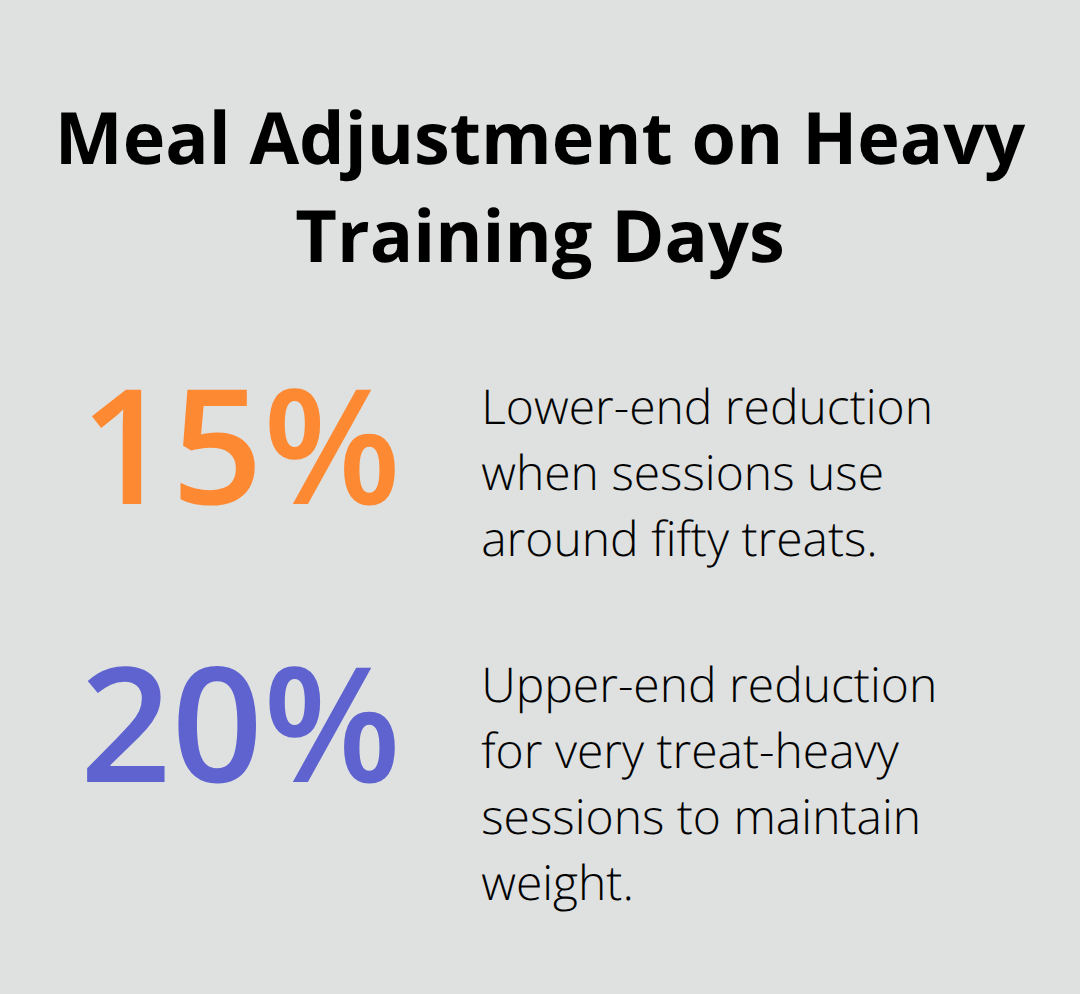
Treat pouches from J&J Dog Supplies or 5.11 Tactical keep treats accessible without fumbling through pockets, allowing you to click and reward within the critical one-second window. Reduce your dog’s regular meal portions by approximately fifteen to twenty percent on heavy training days when you use fifty or more treats. A seventy-pound dog eating two cups of kibble daily should drop to one and a half cups if training sessions involve extensive treat rewards. Weigh your dog monthly during training seasons because excessive treats cause rapid weight gain that compromises performance in Directed Jumping or Moving Stand exercises where your dog must move with precision.
Your treat system now supports rapid learning, but interactive toys amplify that progress by building engagement and mental sharpness.
Training Toys That Build Real Obedience Skills
Fetch Toys Maintain Drive Between Precision Drills
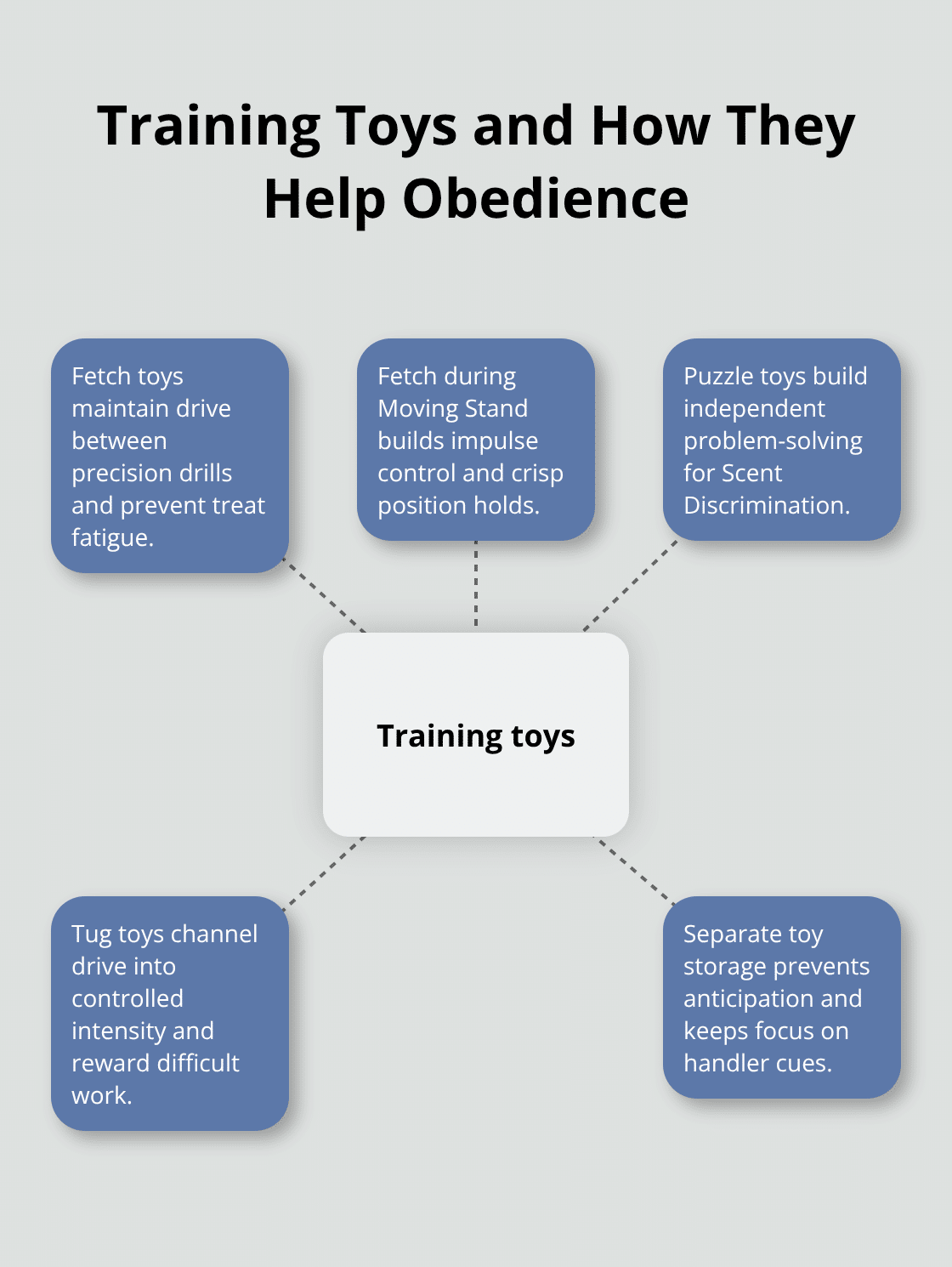
Fetch toys serve a dual purpose in obedience training that most handlers overlook. During foundation work with Sit and Recall, fetch toys maintain your dog’s drive and engagement between treat-based repetitions, preventing fatigue from constant food rewards. Tennis balls work adequately, but RuffWear and KONG produce durable fetch toys that survive hundreds of throws without falling apart or leaving rubber debris in your training field. The key is using fetch as a break between precision drills, not as a replacement for them. Throw the toy after your dog completes five perfect Recalls or Sits, allowing them to burn energy while you reset for the next training block. This pattern prevents treat saturation and keeps your dog’s motivation sharp across longer training sessions.
Fetch Toys Strengthen Position Work for Utility Tests
For dogs training toward AKC Utility tests, fetch toys become especially valuable during the Moving Stand exercise because your dog learns to hold position while you move away, then explodes into action when released. Rotate between two or three different fetch toys weekly because dogs habituate to the same toy, and novelty maintains excitement. Avoid oversized toys that encourage aggressive mouthing, which transfers bad habits into your Scent Discrimination work where your dog must hold articles without damaging them.
Puzzle Toys Build Mental Resilience
Puzzle toys force your dog to problem-solve independently, strengthening mental resilience during exercises like Scent Discrimination where your dog must locate the correct article among decoys. Rotate puzzle toys into training days at a ratio of one puzzle session per three precision training days, using them as mental conditioning rather than primary training tools. This approach prevents your dog from relying solely on handler direction and builds confidence in independent decision-making.
Tug Toys Channel Drive Into Controlled Intensity
Tug toys build bond intensity and jaw strength that translates directly to solid article retrieval during Directed Retrieve and Scent Discrimination exercises. Controlled tug sessions where you initiate and end the game establish handler leadership without aggression, creating a dog that respects your authority while maintaining confidence. Use tug toys from Ray Allen Manufacturing or J&J Dog Supplies for thirty seconds immediately after completing difficult exercises like Directed Jumping, rewarding effort and intensity. Many handlers mistakenly avoid tug work believing it creates aggression, but structured tug sessions with clear start and stop cues actually improve obedience by channeling drive productively (this is especially true for high-drive dogs that need outlets for their natural intensity).
Storage Prevents Anticipation During Training
Keep all toys in a separate bag away from your training area so your dog doesn’t anticipate toys during precision work, maintaining focus on commands and treats as the primary rewards during Utility training. This separation creates clear boundaries between reward types and prevents your dog from fixating on toys when you need their attention on handler cues.
Final Thoughts
Quality dog obedience utility articles form the backbone of consistent training progress, and the equipment you select directly impacts your dog’s performance and safety. A properly fitted flat collar paired with a six-foot leash provides the control your foundation work demands, while freeze-dried treats and a reliable clicker create the clarity your dog needs to understand what earns rewards. Fetch toys, puzzle toys, and tug toys build the drive and resilience that separate dogs performing basic obedience from those ready for AKC Utility competition.
The investment in quality gear pays dividends across years of training, as stainless steel hardware resists rust, leather leashes develop comfortable grip, and durable toys from trusted brands like KONG and Ray Allen Manufacturing survive hundreds of training sessions without failure. Start by selecting a flat collar and six-foot leash appropriate for your dog’s age and size, then add freeze-dried treats and a clicker to your training kit. Introduce fetch toys for engagement breaks, puzzle toys for mental conditioning, and tug toys for controlled intensity work, storing everything separately so your dog doesn’t anticipate rewards during precision drills.
At DogingtonPost, we believe that responsible dog ownership includes investing in equipment that supports both safety and success. Your dog’s obedience journey starts with these essential tools and your commitment to consistent, patient training.